 “Life is the accumulation of scars. Tell the stories.”
William R. Hincy is an L.A. area author whose work has been featured in many of America’s best literary magazines. His short fiction collection Without Expiration (Whiskey Winged Lit, 2019) has been included in Kirkus Review’s Best Indie Short Story Collections of 2020. Without Expiration was also a finalist for the Eric Hoffer Award, and Hincy’s novel But the Ripping Apart (Whisky Winged Lit, 2020) has just been released.
All fine authors, particularly the ones we like to call “literary,” write with deep empathy and insight into the human condition, but that doesn’t mean a thing if our wounds don’t coincide, if a story doesn’t move me. But once in a long while I run across an author whose work not only rings and resonates with insight, wit, empathy, and the rest, but thrills me to the core because their insights directly and indelibly affect me: they laugh at the things I laugh at, bleed from the same places I bleed.
William R. Hincy is such an author. His work shimmers and hums with empathy, wit, and above all a deep acceptance, even love, of our limitations as mere flawed humans.
For a thumbail sketch of Hincy’s work, I’ll simply quote the Kirkus review: “Flawed, despondent characters show a surprising wit and humanity,” the review begins. “Hincy’s taut prose makes the entire collection a quick read but still fills the stories with indelible passages. […] The book strikes a chord with characters whose defects make them simultaneously believable and with descriptions of moments involving a loved one’s death, either its prolonged aftermath or its inevitability.”
Hincy likes to say that “some people run from their demons; others sit down and have cocktails with theirs.” So let’s get that shaker going and sit with Mr. Hincy and his attendant imps.
DC: Bill, thanks for joining me for this interview. Tell me how you came to be a writer.
WRH: You know, I can’t pinpoint one moment, but I can trace back the influences.
As a kid, I remember mostly being alone. My parents both worked, and we transplanted from the western Pennsylvania area to California when I was four, so there wasn’t much family around. I didn’t have many toys, and the desert town I grew up in (Palmdale, shout-out!) was just being developed. So my imagination kept me company as I tromped about in the desert and through empty housing developments. At home, everyday items and the few toys I did have became actors, taking on different roles in the narratives I created to keep myself entertained. I think it was during this time that I learned to use story as the main means for which I understood myself and the world around me.
My parents worked long hours and commuted, so by the time they got home, they ate dinner, watched some TV, and went to bed. But on the weekends my mom would go on and on talking about genealogy and stories about growing up in Appalachia. Genealogical narratives certainly have elements of nonfiction—facts that are beyond dispute or verifiable, like so-and-so were married on this date; George had brown hair; Bill was a sarcastic jackass—but it quickly became apparent to me that they were also colored by point of view biases, misinterpretations, foggy memories, and other tiny fictions that popped up from an epic game of generational telephone.
But rather than dulling my fascination, I found the fictions more stimulating than the facts. I found truth, humanity, substance in those elements that couldn’t be verified. They fostered a love of storytelling that persists to this day. It became clear to me that the narratives we tell ourselves shape our characters, our responses to events and stimuli, our understanding of the world, in almost magical ways. And as I became older and experienced the darker side of life, it was through story that I was able to find the humanity in myself and others even when we did hurtful things.
So being a writer for me is synonymous with becoming an adult, becoming a father and a husband and a friend. It is part and parcel to my journey.
(As a side note, for anyone who knew me in high school, sorry to all of those who had to witness me pretending my pen was a Galaxy-class starship battling the world-killing scourge of three-ring binder. And to the crew of the USS Pen Cap, for your brave sacrifice in the Battle of Sixth Period, you will be remembered.)
DC: Some would describe your work as literary, but I’m not a big fan of the literary vs. genre method of categorization. How would you describe your own work?
WRH: At my core, I’m a goofy satirist with a deep empathy for flawed people. To me, it’s in our contradictions, idiosyncrasies and foibles that we find meaning and identity, and it’s also these areas where I find the most humor. But I’m driven by challenges. I’m exhilarated when I’m challenging myself, society, literary forms, philosophies, the contemporary zeitgeist, et al. And I want my reader to be an active participant in the process—I want them to intuit, to connect emotionally, to imagine, to activate the neocortex and thalamus, and ultimately to reflect on themselves and the world. To do this, I think the reader needs to be invested in the work, to do some of the heavy-lifting, so I don’t lead them by the hand, explaining how every nook and cranny looks, why exactly things are the way they are and characters are who they are. I take them to a scene, a moment, a dilemma, and leave them holding the consequences with as little authorial intrusion as possible.
All of this leads to challenging the type of stories told and how they’re told. Story by story, I consider the questions being raised and invent new processes to pose them, and the effect is the general eschewing of literary norms and formulas. Unfortunately, I think “genre” has become synonymous with “formula,” while “literary” encompasses everything else. I don’t personally agree with that notion or like the literary vs. genre dichotomy either. Frankly, I think genre fiction’s formulaic nature tends to result from the big business modus operandi of looking for things that fit into a box they know how to sell. So from acquiring new books to editing to promoting, the goal is to fit everything in a tidy package that’s been proven to have an audience.
The stuff traditional publishers “take a chance on” becomes their “literary” work. It may not fit into the neat formulas they’ve devised for genre, but I’d contend they have formulas just the same, be it theme, characterization, content, etc. Realism and character-focus sometimes get conflated with literary fiction, as well, but historical fiction, murder mysteries, and other genres abound with realism, and work of any color can be character-focused.
None of that is to say that every book produced by trade publishers is formulaic, but compared to indie books, there’s no comparison in risk-taking, boldness and just sloppy, ecstatic wackiness of content and variety. I think because of the lack of formula, character focus and generally realistic plots (though I’ve certainly written surrealist and absurdist works, as well), my works gets labeled literary, but if I were to write fantasy, sci-fi or erotic, the same focus on character and rule of consequences would remain.
DC: Why did you settle on the title, Without Expiration?
WRH: The title is derived from one of the fictions, a story entitled “Best If Used By” which was a finalist for the Short Story America Fiction Prize. In it, a grieving mother ruminates on the death of her son and subsequent loss of her marriage as she puts away the groceries. Even though she is now living alone in a new apartment, everything around her acts as a mirror to those painful times, and she pauses, haunted by the expiration date on a box of fruit snacks. With memory and regret and heartache swirling inside her, she finally accepts that there are “those things with no expiration.”
At its heart, the title is speaking to the unresolved. And the unresolved nature is both internal and external. The inner machinations are the same now as they have been at any point in human history—when we lose someone close to us, we never forget the sorrow of that loss, the emptiness, the regret. What has changed is the intensity and relentlessness of the external influences. With the advent of the internet and in particular social media, our actions are recorded and retrievable by the masses in a way that we’ve never dealt with before. The effect is that things we may have internally resolved—mistakes we’ve grown from; hatred we’ve dispensed with; crimes we’ve been held accountable for—are now remembered in perpetuity or uncovered and used against us with a swiftness and ferocity that we’re not equipped emotionally or intellectually to handle. The collective memory fits us with dunce caps and scarlet letters that stream unimpeded into every corner of the globe upon the quad-staked crucifixes of hashtags.
So how does one live a good life? How do we cope, how do we thrive, how do we forgive and allow for the possibility of redemption? How do we live with ourselves when there is no expiration date on our failures?
DC: The subtitle for this collection asks the question, “Are we bad people who sometimes do good things, or good people who do bad things?” Having looked deep into this, are you any closer to an answer?
WRH: I don’t think there is an answer, and if there is, I certainly haven’t found it. The question itself is intentionally double-edged to make a point—we all do bad things. To be clear, most of us aren’t serial predators, tyrants or fortune 500 CEOs, but it’s hard to imagine a life, especially in this day and age, where we haven’t lied, stolen, been callous with another’s feelings, cast aspersions (I think the Twitter platform exists precisely for this), taken more than our fair share, or just damaged another inadvertently. And what about those who have committed true crimes? The teenager from an abusive home who goes on to bully, beat, even murder? The husband or wife that “has it all” but has an affair, destroying two families in the process? The broker whose Ponzi scheme destroys the life savings of thousands? The list of scenarios and misdeeds could go on forever, but the question remains: are we good or bad people?
Implied in the question is the question from the title—do those labels have an expiration date? Because maybe we can agree that a twenty-five-year-old man who gets in a bar fight and kills someone is a bad person in that moment, perhaps during that period of life, but what about twenty years later, thirty, forty? And if we label someone “bad,” can we still recognize that they’re capable of good? Can we forgive or understand the “good” person when they commit offenses? Can we hold the good person accountable for their crimes the same way we do the bad?
That tagline and the title are meant to frame the narratives so that the reader is considering the humanity of the characters in that context. We are all flawed. We suffer and try to figure our way through it, or maybe “with” it is better said, and things get messy and we hurt people. That’s really the bad thing. And it’s crucial to include hurting ourselves in that equation.
In the end, I hope the stories provide a place of reflection and meditation where the question itself is challenged and, perhaps, the concept of labeling people “good” or “bad” is abandoned.
DC: These short fictions cover a wide spectrum of experiences and emotions ranging from garden-variety passive aggressiveness to homicidal vengeance, from surrealist satire to the most poignant tragedy. Although you never flinch from exploring the most raw truths, the reader also has a sense of huge humanity and a deep compassion for the human condition. One of your stories, A Study in Discontinuity, digs into the disintegration of a relationship in a painfully incisive way; yet, as in the majority of your work, there’s an underlying sense that redemption is possible. How does that work? Can there be redemption even in a world where our misdeeds have no expiration?
WRH: Wow, I’m not sure there’s enough space on the internet to fully answer that question!
To your point, with the advent of the internet and social media, it has gotten harder and harder for society to allow room for redemption. Even if we have undergone true personal change, our “sins” are stored in posterity or can be uncovered years later, and a major component of redemption is the acceptance back into society. It’s not mandatory, of course, but even our personal redemption can be disrupted when we are pelted by our past wrongdoing again and again.
“A Study in Discontinuity” captures this not through the collaborative memory of the internet, but through the story of a woman who is in a devastating car crash moments after her marriage dissolves. She is left in a persistent vegetative state, but five years later, she awakes. And the pain she feels is as raw as the day of the crash. When her estranged husband wants to put the past behind them, she tells him: “Your past is my present—do you understand that?” But he has had years to move forward, to change. And that’s the dilemma we’re all faced with—dealing with pain we still feel while somehow allowing room for individual growth and change.
All that said, I think that if we don’t believe in redemption, there is literally no hope for humanity. And I do so want to hope, and I believe there’s great reason for hope, even in the darkest of times. There have certainly been notable examples of people being redeemed, and I’d take it further and say that we are all examples of redemption. We’ve all learned from mistakes, failed and tried to do better. Without struggle, we’d know nothing about ourselves, so we have to cling to the possibility of redemption even in the midst of a pandemic, social unrest, and corruption and scandal on a global scale.
And I believe redemption begins with laughter. How many times have you read something, watched something, or experienced firsthand hitting rock bottom and just starting to laugh at the absurdity of it all? Perhaps that’s where the satirist in me reveals itself. So I hope as the reader goes through this anthology, they laugh and cry and are frightened by the characters. If it helps provide an avenue for even just a few people to develop a deeper, more open empathy and understanding of themselves and others, ridding the need for labels and cancellations, then I think we move a little closer to the how of it all.
DC: I know that you spent years on some of these fictions. Tell us a little about your writing process. Do you begin with character or idea? And how do you develop a story?
WRH: I usually begin with a challenge. For instance, the idea for “A Study in Discontinuity” stemmed from the following challenge: can you write a compelling, human piece of fiction in the format of a scientific research paper? Similarly, the surrealist religious satire “Amen” originated when I challenged myself to write a story in first person omniscient. Other times I challenge myself to get to the root of the humanity of a character who may not appear likable. And other times, it’s just a flash of inspiration, an almost biological imperative to bring a specific idea into existence.
As far as developing a story, I tend to think of myself more like a sculptor than a writer. Rather than outlining or writing character synopses, I usually write what is sometimes referred to as a “zero” draft. I think of this part of the process as finding my materials, but rather than granite or clay, I’m cobbling together clay and backstory, marble and context, wood and irony, story and shadow and distorted points of view. After I’ve finished the zero draft, I step back, examine what I have, and begin shaping. Sometimes this requires adding material here and there, or it might involve whittling down to the essential core of the thing. For example, the short story “Teeth” began as a 12k word story and was distilled down to a 1k word piece by the time it was published.
Generally after the zero draft, though sometimes before, I step back from the idea and consider what process is needed for that particular work. Changing or adjusting your process is not for the faint of heart: it can be unsettling, scary even, and requires a lot of grit to tough your way through the inevitable self-doubt. But it helps to produce variety and opens you up to possibilities a rigid, constant process is unlikely to unveil. For instance, the novel I’m currently working on (more on that later in this interview) is an epic absurdist satire with a range of POVs. To stimulate distinctness and liveliness between characters, after the zero draft I worked out a full outline of the events, then wrote the next draft one character at a time, charting my way through the story and their development as I went. In the process, I learned that a couple characters I thought were minor were in fact pivotal, and exchanges between characters suddenly took on exciting new meanings. For the final draft, I’m going work through the book front to back to ensure unity and cohesiveness.
A final note, I do almost all of the heavy-lifting—from ideation, story development, momentous sections, and difficult passages—subconsciously. I purposely set my schedule so that I write for a few hours, then go for a bike ride, take a shower, lift weights, or another activity where I’m not actively engaged in language-based thinking and my imagination has free range. I also spend time writing or editing before going to bed, so what I’m engaged with is front and center in my mind while I sleep. Once I feel a piece is too conscious that I have a hard time stepping away from the nuts and bolts, I let it rest and work on another piece.
DC: A number of your stories have been published in well-regarded literary magazines including Short Story America, Passages North and the Avalon Literary Review, and received good critical attention. This would have put you in a better position than most authors to land a traditional publishing deal with your collection, yet you chose to go the indie route. What led you to that decision?
WRH: My intention has always been to be a hybrid author, publishing some pieces traditionally and others independently. Theoretically, traditional publication can help with visibility, wider distribution, perhaps get your work in bookstores and libraries. Meanwhile, going indie allows for full creative control and a larger portion of the profits. By going hybrid, I’m aiming to bridge the gaps and, as Hannah Montana would say, “Get the best of both worlds!”
Both have their pluses and minuses to be sure, as I learned the hard way. An earlier version of my novel But the Ripping Apart was traditionally published under a different title roughly seven years ago. And wouldn’t you know it, I hit the unholy trinity of the bad trad publisher experience: ignored and forgotten (judging by other authors I’ve met, this is just their way of doing business); no say on the final packaging (resulting in a hideous cover and goofy author photo… although I guess I can’t blame them on the picture considering the model); and no coherent advertising push. Throw in the lack of copy-editing and ebook, and I ended up requesting out of my contract and spent two years editing, revising, and completely repackaging the novel on my dime. (Disclaimer, I don’t believe this is the common publisher experience by any means.)
Being that so many of the stories in WE had been previously published and I had such an unfortunate experience, it was an easy decision to go indie. Furthermore, to be true to the subtitle, A Personal Anthology, I felt I had to have complete creative control to develop an artistic expression unique to me. To do that, it felt imperative that the collection be diverse and unusual and bold. The contemporary trend is for anthologies to have an overarching tone and storytelling style, so it’s unlikely I would’ve been able to package “Amen” with “A Study in Discontinuity” because tonally and narratively they are so different. But for WE to truly be a personal anthology, both works had to be included.
DC: Your recently released novel, But the Ripping Apart is a touching, irreverent, tragicomic look at a young father’s battle with his demons and his search for purpose amid crippling self-doubt and a sense of failure. It’s often said that first novels are largely autobiographical: was that the case with this work?
WRH: In some ways, you could say But the Ripping Apart is an account of my early thirties as remembered in a fever dream. Events occur out of sequence, are distorted, heightened; every feeling is intensified; and delirious hallucinations snake in and out of the narrative as impactful and real as any of the actual memories.
The novel’s opening scene is based on a night my wife and I visited a woman she knew that was a hoarder. But as a fiction writer, I wasn’t interested in capturing that night or those events—I was intrigued in the underlying truths behind them, the challenge of crafting a story that captured the humanity of flawed, heartbroken characters as they try to help each other despite their faults. Jack, Erica, Ms. Lyon became vessels for telling that story, rather than representations of real people.
As the novel progressed, the characters developed into unique entities as they responded to the story’s circumstances and situations. And during the editing process, there was little recognizable about any of the scenes or characters. In the end, I saw very little of myself in Jack, except for our shared inclination to patron our demons. But that’s no small similarity. Like Jack, I’ve been shaped by my failures, my limitations, my openness to the taboo.
I was a single dad (a #girldad before it was trendy), and I have a running emotional ledger of all of the times I failed my kids. As a parent, you try to shield your demons from your kids, but can you really? I remember driving home completely hungover to take my first- and second-grade daughters to the Father-Daughter dance. The countless times I snapped at them rather than nurture them. Moments I failed even to be there. My hope is that by reopening those real wounds in the novel, as painful as they were to write and revisit, the reader will contemplate on their interactions with their own demons in a space devoid of judgment or expectation.
DC: In your bio – and I’m going to encourage every reader to visit your website, since it’s one of the absolute best writer sites I’ve ever seen – you have a delightful line: “Some people run from their demons; others sit down and have cocktails with theirs.” Would you expand a little on that and how it relates to your fiction?
WRH: I actually wrote that quote for But the Ripping Apart. In the scene, a retired schoolteacher who has spiraled into alcoholism and hoarding is confronted by a young father who is dealing with but not exactly facing his own problems. She recognizes the kinship between them, even if he doesn’t, and says, “My life may seem foul to you now, but you’ll understand…. Some people run from their demons; others sit down and have cocktails with theirs. You and I—we can’t even recognize ourselves without them.”
A prevailing way of thought has been to fear and vanquish our demons. Psychological torment, physiological dependence, and unsavory compulsions are compared to monsters, plagues, demons. But what if “the dark side” isn’t something to vanquish, but something to harness? This is probably an unpopular statement and may make Star Wars fans squeamish, but sometimes igniting our inner turmoil can fuel greatness we wouldn’t otherwise be able to achieve. There is a peculiar insanity, almost immorality, necessary to reach unreasonable peaks. You see it across the spectrum, from sports stars to artists, to corporate moguls to homemakers—sometimes our irrational, dangerous drives can be focused to drive irrational results.
I’ve struggled. I’ve fallen. I’ve failed—I’ve let down the people I love the most when they’ve most needed me. None of that is easy. But it is intensely human. Running from or combating demons does not capture the sum of our experience. There are certainly those of us who indulge them, whether just momentarily, in fits and starts, or as a way of life. So often that indulgence is frowned upon, but I think it’s dangerous and unfulfilling to turn away from any aspect of our humanity, however unsettling, or to assign it to the realm of monsters. I think being understanding and accepting our impulses is a crucial step towards self-awareness, then we have the hard work of learning to live with them.
DC: You have a corporate career which only recently became part-time, as well as a large family; on top of that, you homeschool your young son. That’s a lot to juggle and still get writing done: how do you manage your time?
WRH: That is the most common question I get—just, how?
I think the first and most important thing is understanding what your goals are. I’ve always had an abstract idea of what I wanted to accomplish, but I sat down a few years back and committed them to paper. And by goals I don’t mean fantasies—we can fantasize about anything we choose, walking on the moon, selling a Harry Potter-esque hoard of books, appearing on Carson, etc., but I focused on what was most vital to me. At that point, I’d already been published numerous times, but I was by no means treating writing like a career, so this was the first step in that process. And what I learned was that I want to be an important writer. What does that mean, exactly? To me, it means that I connect on an emotional and intellectual level with a reader, and it means that I have to challenge not just literary forms, contemporary zeitgeists, societal biases, et al., but also my readers themselves.
But how do you measure that—how could I ever say I’ve achieved that goal? Well, for one, it means that I expect some mixed reviews. Some people don’t like being challenged, or it simply may not speak to some readers. And that’s okay because I’m not aiming for quantity or popularity, I’m focused on impact. But for it to have an impact, my work has to be read to some capacity, so attaining some visibility and sales is necessary. I just don’t worry if I’m ever widely popular or a best-seller because I don’t equate fame to importance. Importance is connecting with individuals, not appealing to the masses. This also helps determine the stories I want to tell. I’m not trying to catch the coattails of a trend or fit into a neat, acceptable package—I’m trying to tell stories that emotionally resonate, that unsettle, maybe even trouble the reader.
Once I concretely understood my desires and developed ways to measure them, I then planned my schedule. Putting family first was pretty straightforward, and with two adult daughters and one entering high school, the primary focus became on homeschooling my son (which I’ve done even before the pandemic made this a reality for most of the world). Since I’m no longer moving up the corporate ladder and my role is part-time, work is no longer a prime priority. I get my job done in my hours, then focus my time on my writing, with the craft always coming before promotion. I also recognized that my health was critical to ALL of these endeavors, so I made sure to include working out in my schedule.
Because I understand exactly what I want and what success looks like to me, I’m able to ruthlessly prioritize. My daily must-do, can’t-fail activities are homeschooling, working out, and actual writing (because Lord knows there are a ton of writerly activities that could cloud that item). To keep me on track, I make detailed lists of any miscellaneous things that need done, then sprinkle them into my schedule throughout the week (feels so good to check those boxes). I also keep a monthly calendar so I remember to pay bills, take the trash out, clean up after the dogs, etc., but when things start to overflow—and they will—I’m always grounded by what is essential.
It helps to have an amazing, supportive wife. Her tireless work ethic and drive inspire me to put the same dedication into my writing—I never want to fail just because I was outworked.
DC: Marketing is often difficult for indie authors, typically because of personality, lack of funding, or both. How do you approach marketing your work?
WRH: Fingers crossed—the same way every writer does!
Like many writers, I often put marketing on the backburner. Going back to ruthless prioritization, I set specific writing goals that must be done before going onto social media, writing on blog content, or working on promotions. But I do want to get my work out there, and because I’ve been historically so busy with my family and corporate job, I don’t have much of a platform or marketing experience. Even my day job as a Quality Director for a medical device company isn’t about selling—it’s about keeping products safe and effective and ensuring compliance with federal and international laws.
So I’m using Without Expiration and But the Ripping Apart as experiments. WE was released in November 2019, when COVID-19 was still just a blip on the news radar, which allowed for a bit of guerrilla marketing. A group of about fifty of us staged the #WithoutExpiration Exhibition, a mock protest in which the protesters held signs announcing fictional transgressions. Poster boards proclaiming “Cheated on my taxes,” “Neglected my dog,” and “Was careless with a heart,” streamed through old town Pasadena, CA, along with chanting and good-natured revelry. So much of the anthology centers around questioning the notion of moral authority, so the protest fit right in and got a fair amount of media coverage.
I’ve been lucky enough to do some readings and speak at colleges, which I love doing because you get to connect with people in-person, which I still think is the best way to build a community around your work. It also gives me a chance to exercise my acting chops, which is always great fun (in my younger days, I performed in quite a few community theatre plays until I could no longer accommodate the night rehearsals with being a single dad).
Of course, with the pandemic none of these options were available when But the Ripping Apart was released in March, so I’ve focused on the digital end. I’ve never enjoyed spending time on social media, and I quickly found the clickbait aspects less than satisfying, so I’ve focused on looking for sincere, thought-provoking exchanges, and less on the volume of followers. I had the notion of writing original content for Twitter and Instagram. I even produced two living obituaries earlier in the year, which were mainly satirical and focused on accepting and even laughing in the face of death, but when COVID hit in all its gory I couldn’t wrap my brain around it any longer. The problem with original content was that my standards for content and refusal to use formulas make it hard to churn out quickly, and it took too much time away from my WIP.
Being that I’m still working part-time, I don’t need to turn a profit on either book, so I’m reinvesting anything I earn to learning about the business, trying to build a presence around content-creation. It’s interesting, though, because as a “non-genre” writer, there aren’t many support services I’ve found in the indie community. So I’m really out in the Wild West, which is a fascinating learning experience, if a bit lonely. At least I can karaoke campfire songs!
DC: I know you’re currently at work on a large, even a landmark, novel. What can you tell us about it?
WRH: I’m currently working on a no-holds-barred, nothing’s sacred, completely irreverent satire entitled Pirates of Appalachia. There’s geopolitical intrigue, true love, hostile takeovers, sharkittens, esports, mermaids, prophecy, and some shockingly potent rum!
Pirates is set in North America about a decade after a series of events collectively referred to as the “Trumpocalypse.” Central to these was the War of Four Domains, a cyberwar pitting Amazon, Apple, Facebook, and Google against each other and the federal government. Widespread internet outages ensue, packages aren’t delivered, latte foam art goes unposted, and no one can GPS their way home from work. It’s truly the dark ages! In the aftermath, parts of the United States and Canada are sold off to foreign countries, mega-corporations, and celebrities (giving new meaning to Oprah Winfrey’s OWN network). Other areas form city-states, and vast expanses of the continent become “unincorporated areas,” where self-ruling settlements, homesteaders and social justice warlords struggle for survival.
The grandest city-state of them all is the Independent City of Pittsburgh, which has swallowed up most of what was formerly western Pennsylvania. As the novel begins, the city is in the midst of the gubernatorial election to select a new “guber,” the city’s top elected official. Adam Patterson of the Twitter Party, formerly a Father in the Church of the Everlasting Wander, is having a health crisis and a crisis of faith heading into the final debate with Michael Hawk, the savage, charismatic candidate for the Heel Party who moonlights as an esports star. At stake are how to allocate the tax payout, the retirement age for government employees, and what to do about the war with the Xioddarm being waged a world away by citizens patronizing the DroneStrike arcade. But after Patterson receives a vision during the debate, he goes off-script and references the “forbidden hashtag,” turning election season upside-down.
Meanwhile, in unincorporated West Virginia, Kohl and Keet search for the fabled treasure of the pirates of Appalachia in hopes of becoming rich and impressing the women they love. In their quest, both are transformed in surreal, fabulous way, but when they return, they learn that Kohl’s betrothed, her home, and everything she owns has been taken to Pittsburgh. The city is metastasizing, consuming more and more of the hills daily. Fueled by legends of their father’s taking to the rivers and looting the countryside, Kohl and Keet set sail with an ever-growing band of eccentric buccaneers and a vengeful ghost to sack the Independent City of Pittsburgh once and for all.
The past and present, cyber and RL, technological and magical are on a collision course—there’s no better time for a drink!
DC: Bill, thank you so much for spending time with us, it’s been absolutely fascinating. Is there anything you’d like to add?
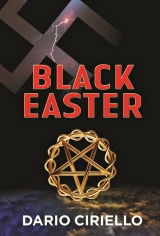
WRH: First off, thanks so much for having me here for this interview. I’m a great admirer of your work, both your editing and your writing. Sutherland’s Rules, Black Easter and Aegean Dream truly touched me, and I think about them routinely. I hope selfishly, and for the world at large, there is more on the way!
It hasn’t been announced yet, but Without Expiration is now available as an audiobook. Narrated by the supremely talented Darren Eliker, the audiobook accentuates the anthology and helps unpack the dense stories and uncover new layers of emotional resonance. Being that Without Expiration is a short read (about 150 pages), I encourage everyone to read the book and then listen to the audiobook—it’ll take you about as long as you’d spend on an average-sized novel, and I think you’ll find more connections to the work at the end of it.
For free fiction, more about the author, cinematic book trailers, living obituaries, the working prologue of Pirates of Appalachia, and more, visit WilliamRHincy.com
To order/Buy:
Without Expiration: A Personal Anthology (print and ebook)
Without Expiration: A Personal Anthology (audiobook)
But the Ripping Apart (print and ebook)
(Full disclosure: Bill Hincy is a personal friend and I am also his editor.)

 RELEASED ON JANUARY 15th, 2020, just before COVID-19 slammed into our world, Katy Nicholas’s excellent debut novel, As the World Falls Down, about a worldwide pandemic that kills the vast majority of humanity, is one of the best novels I’ve read in the past few years.






 Dario Ciriello